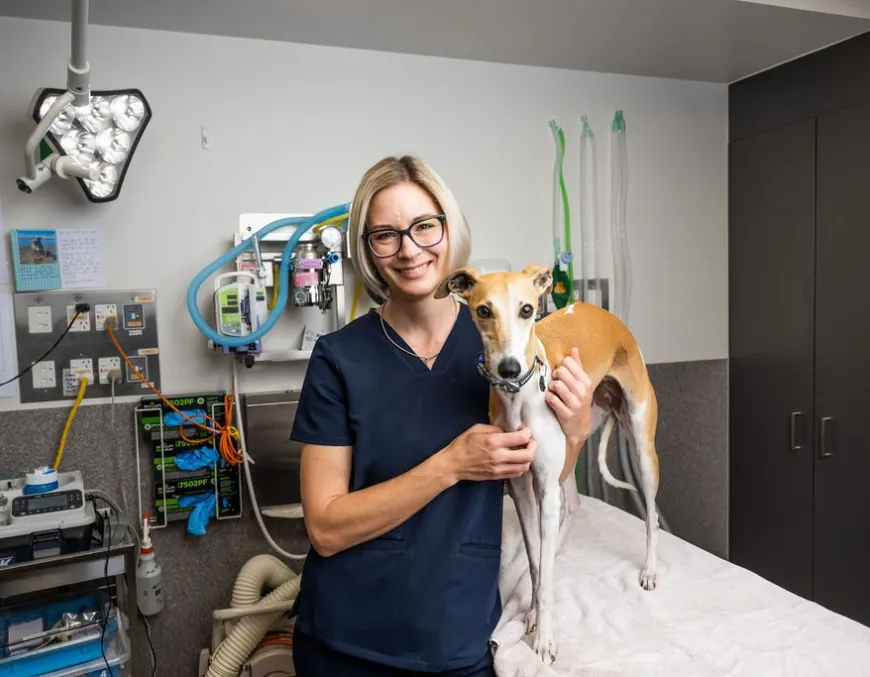
Few treatment decisions feel as emotionally loaded as agreeing to remove all of a beloved pet’s teeth. While it is only ever recommended when absolutely necessary, many pet owners are surprised to learn that dogs and cats can live and function quite well after full mouth extractions. If you have been told this is the best course of action, we understand your concern. Your pet will be okay and, more importantly, pain-free once the procedure is complete and they’ve had time to heal.
At Advanced Animal Dentistry, we combine extensive knowledge with a genuine passion for animal wellbeing to deliver care that improves quality of life. Seeing patients return to comfort and health is deeply rewarding. At times, that outcome requires difficult decisions. Extracting all or most teeth is never taken lightly, but it is often the best option for conditions such as chronic gingivostomatitis, canine chronic ulcerative stomatitis (CCUS), severe and advanced periodontal disease and juvenile periodontitis, among other serious conditions.
Here are the five questions we are most often asked, along with the reassurance we give our pet families.
Will my pet be in pain after full mouth extractions?
The reality of any surgical intervention for any living being is that some pain is involved. The two most important things to remember are that full mouth extractions are only recommended when a pet is already living with significant daily pain, and that this pain is actively anticipated and carefully controlled at every stage of the procedure, including before anaesthesia even begins.
We take a multimodal approach to keep pain at an absolute minimum. This means it is addressed from several angles rather than relying on a single medication. The process begins with pre-emptive analgesia and the use of nerve blocks during surgery to prevent the nervous system from becoming hypersensitive. Together, these steps support a smoother recovery, followed by a personalised, layered plan for pain control at home.
In most cases, pets are more comfortable than owners expect, often eating within hours of surgery. After a few days, many patients are noticeably better than they were before the procedure, because the source of chronic pain has been removed.
“Full mouth extractions are never taken lightly, but they are often the best option for conditions that cause significant daily pain.”
How will my pet eat without teeth?
This is a common concern, largely because as humans, we cannot imagine living without our teeth. If you were told you needed full mouth extractions, you would naturally wonder how you would eat afterwards. For domestic cats and dogs, this is not the case. Unlike animals in the wild that rely on their teeth to hunt and process food, pets are given meals that are already in manageable portions. As long as they can get the food into their mouth, they will swallow it.
Many pets continue to eat dry food after the procedure. Cats can be particularly fussy about what they eat, and if they have always been dry food eaters, that is likely to remain the case following full mouth extractions, with no issues at all. It often surprises owners that food is swallowed whole, even though many will have seen it happen if their pet has regurgitated a meal before.
While we do not encourage hunting, there are instances where cats have been able to catch prey normally without any teeth. It is a reminder of how little teeth are relied on for basic function.
“Recovery is often much faster than you’d expect… most will return to normal within a few days.”
Are there any long-term consequences of removing all my pet’s teeth?
There are consequences, but they are generally minor, and this is where it helps to return to the underlying reason the procedure is being recommended in the first place. Full mouth extractions are advised because a pet is experiencing significant, often chronic, pain, and the benefits far outweigh the side effects. In many immune-mediated and inflammatory conditions, removing all teeth can reduce pain and may even eliminate the need for long-term medications and ongoing management.
This question is another that strongly reflects human concerns. If a person were to have full mouth extractions, there could be dental consequences such as teeth shifting, bone collapse, bite changes or over-eruption (where opposing teeth continue to grow because they no longer meet resistance). This does not apply to cats and dogs. Their teeth do not touch like human teeth, and their spacing and jaw mechanics are entirely different. As a result, they do not experience the progressive movement or occlusal problems seen in people.
Some changes to the jaw can occur, particularly when lower canine teeth are removed, but these are almost always cosmetic rather than medical. Ultimately, leaving diseased teeth to fall out on their own often causes more bone loss and structural damage than removing them in a planned, controlled way.
Most cosmetic changes are subtle and often only noticed by owners who know their pet well. In cats, changes are minimal. Occasionally, the tip of the tongue may protrude slightly, usually when relaxed or sleeping, and many owners find this endearing.
Dogs may show more visible tongue movement, particularly older or anxious individuals or those with hairy faces. In rare cases, repetitive tongue movements or licking behaviours can occur. These behaviours are not thought to be pain-related but rather a period of sensory adjustment.

Are there risks involved with full mouth extractions?
As with any procedure requiring general anaesthesia, there are some risks, but they are considered extremely low and are always managed carefully. Full mouth extractions are meticulously planned. Because surgery time can be longer and more unpredictable than normal extractions, pre-anaesthetic assessments, including blood work, kidney evaluation and cardiac assessment where relevant, are pretty standard.
Owners sometimes assume that pets with underlying conditions such as heart or kidney disease cannot undergo the operation, but that is not always the case. It can often be tailored with additional monitoring, longer hospital stays, fluid support or specialist anaesthetic input.
In some situations, surgery may be delayed or alternative approaches recommended, but it is important not to automatically exclude your pet based on that assumption.
Overall, the risk of surgery is weighed against the much greater risk of leaving painful, diseased teeth untreated.
What does recovery normally look like?
Recovery is often much faster than you’d expect. Many pets will even be eating on the evening of the surgery. Sometimes, they’re a little quieter on the following day, but with rest and reduced activity, most will return to normal within a few days.
Owners may need to make minor feeding adjustments briefly. Some pets take food more messily at first, and they may benefit from flatter dishes or bowls with sides. These changes are usually short-lived and resolved by the first recheck.
Pain relief will continue during your pet’s hospital stay and after they return home. Most will be discharged with more than one pain relief option, so comfort is not reliant on a single medication.
By the time of the follow-up visit, most owners say their pet seems like themselves again, just more comfortable.
“Unlike humans, pets don’t rely on their teeth in the same way — they’ll still eat normally as long as they can get the food into their mouth.”

When comfort matters more than teeth
Has the full mouth extractions recommendation been made for your pet? It’s hard to picture life on the other side of this decision now, but rest assured, it’s only been suggested if it’s necessary. And your pet will feel a whole lot better once the surgery and recovery are complete. Dr Aaron even has personal experience with this, having witnessed his own cat eat the same evening.
If you would like further information or support, you can contact our team or explore more resources on our pet owners’ page.