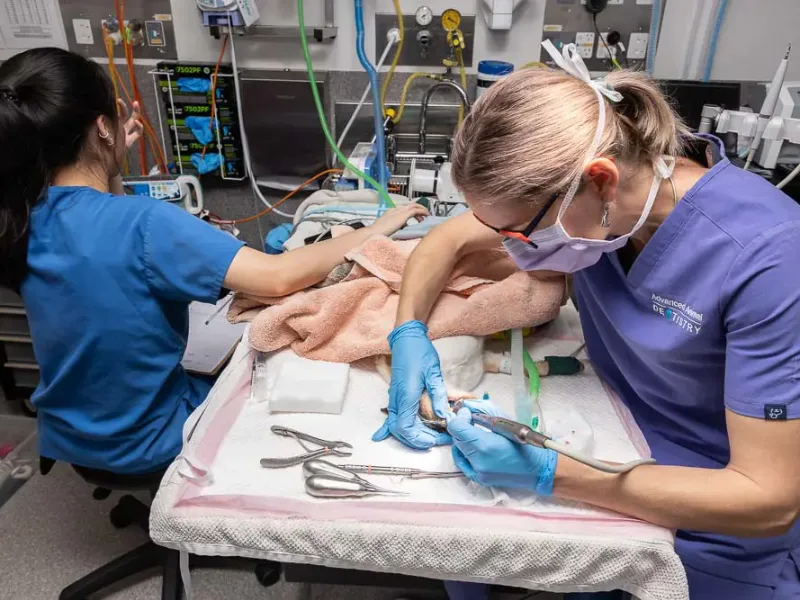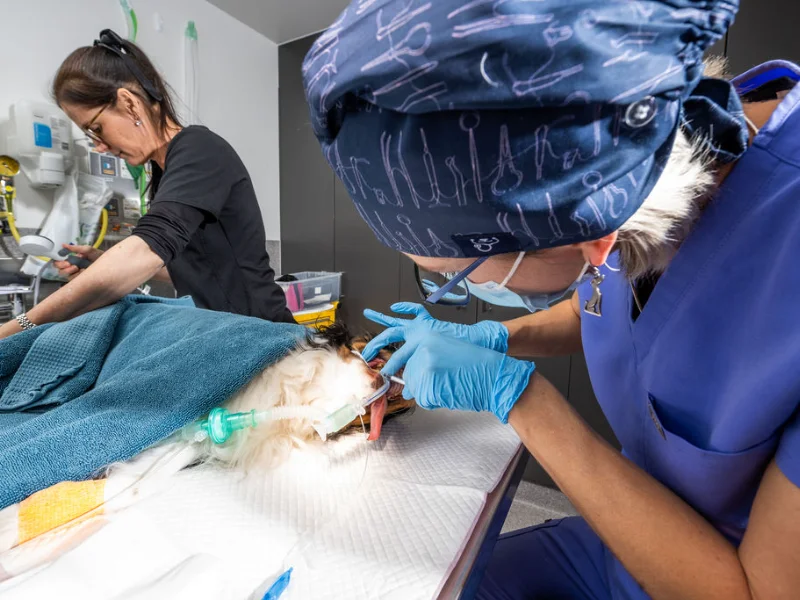
We assess each patient individually, considering their health history, age and any concurrent medical conditions, to tailor the anaesthetic approach to their specific needs.
Dental radiography is now routine in small animal practice. What receives far less attention is how those images are organised once they’re captured.
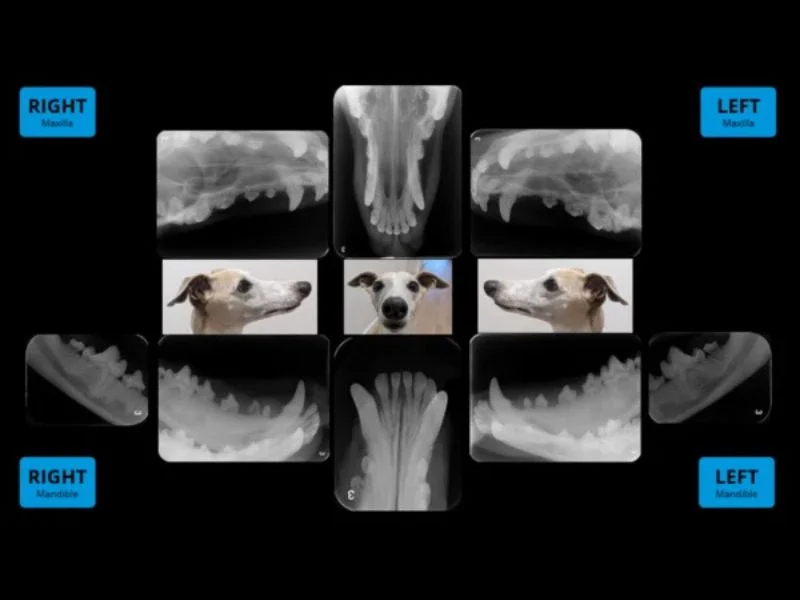
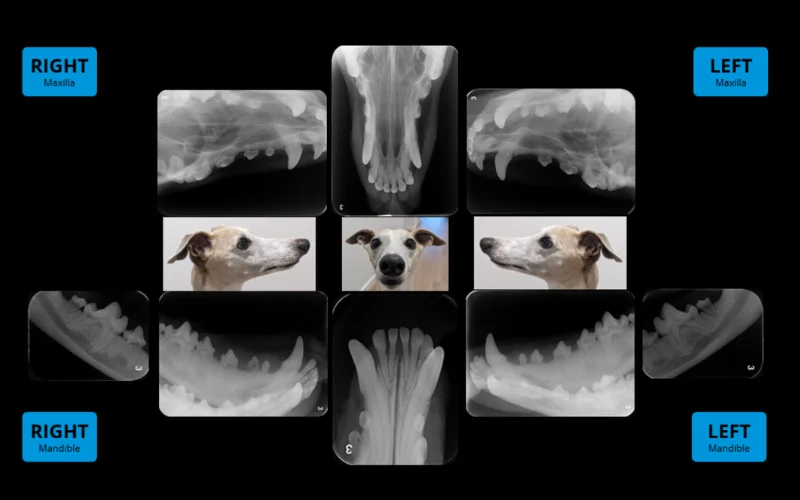
At Advanced Animal Dentistry, imaging forms a large part of our daily work, and we’re regularly asked about best practice. Labial mounting means orienting radiographs as though you are facing the patient, with the patient’s right displayed on your left, consistent with broader medical imaging conventions. This creates a consistent framework for reading studies, reduces left–right confusion and aligns images with examination and dental charting to support clearer and more confident clinical decisions.
Consistency across imaging modalities
Labial mounting is not exclusive to veterinary dentistry. It follows the same orientation principles used across medical imaging. This is because it:
- Mirrors orientation used in radiology, CT and MRI
- Keeps left and right consistent across all imaging in a case work-up
- Reduces mental repositioning when moving between imaging types
- Supports uniform standards within multi-clinician or multi-site practices
- Improves clarity in referral communication and case review
It is simply a way of ensuring dental radiographs follow the same visual logic as the rest of clinical imaging.
Where orientation errors become clinical errors
Once radiographs move into treatment planning, inconsistency in mounting can contribute to:
- Misidentification of specific teeth during extraction planning
- Discrepancies between radiographs and dental charts
- Delays in decision-making during anaesthesia
- Increased risk of error in multi-clinician case management
- Greater difficulty interpreting studies in patients with asymmetry, missing teeth or significant skull variation
- Higher risk of image misattribution or documentation error in high-volume environments
Practical considerations
In the image at the top of the article, you can see a standard labial mounting layout. Maxillary images are positioned on the upper half of the series, mandibular on the lower. The patient’s right appears on the viewer’s left.
In a consistent system, arcade and quadrant should be identifiable at a glance, without flipping images or relying on left and right markers, and individual teeth should align logically with the dental chart. A predictable layout also makes anatomical variation easier to assess, particularly in breeds with significant skull differences or in patients with missing teeth.
A foundational aspect of dental radiography
Mounting systems are often shaped by individual clinical training. As imaging plays a greater role in treatment planning and referral communication, consistency in how studies are organised becomes increasingly important for clarity, accuracy and efficient case management.
In more complex cases, radiographs are not viewed once and filed away. They are revisited during extractions, reviewed alongside colleagues, compared over time and shared with referring veterinarians. A mounting system that is predictable and universally understood keeps the focus on pathology rather than orientation.
Maintaining standards in dental imaging
Mounting systems are rarely the focus of discussion, yet they influence how dental radiographs are interpreted, reviewed and recorded. A consistent framework removes unnecessary variation and allows clinical attention to remain on diagnosis and treatment planning.
If you would like to explore mounting systems, structured interpretation or broader principles in dental radiography in more depth, we regularly discuss these topics through continuing education sessions and in-practice training. Please feel free to ask about upcoming events or to arrange a short in-clinic training session at your practice. You can also access our helpful handout here.