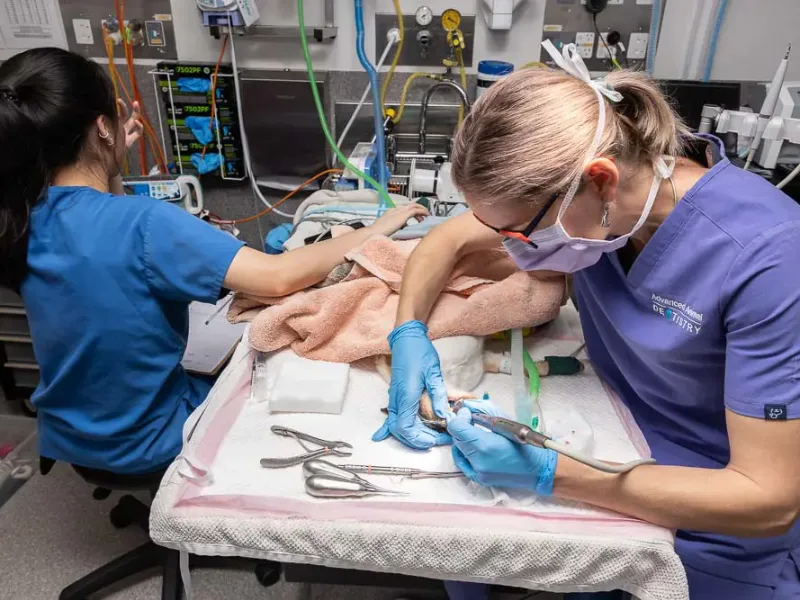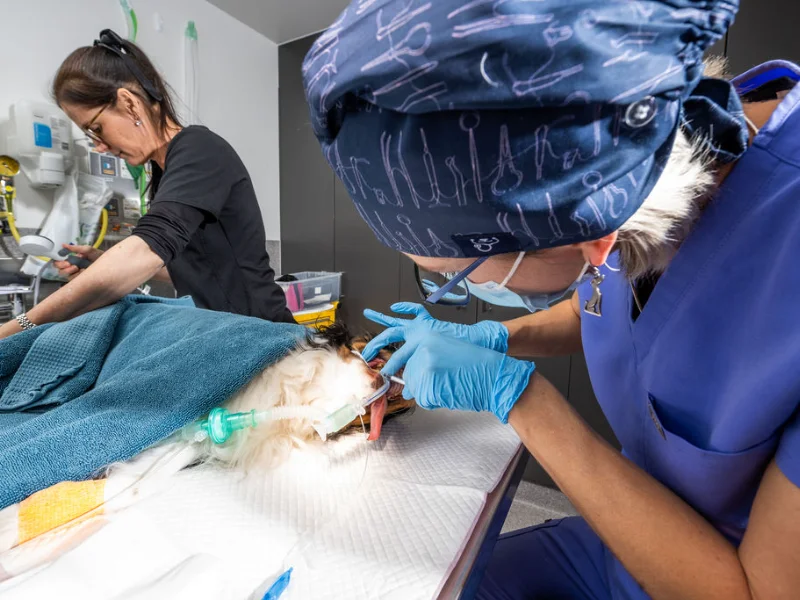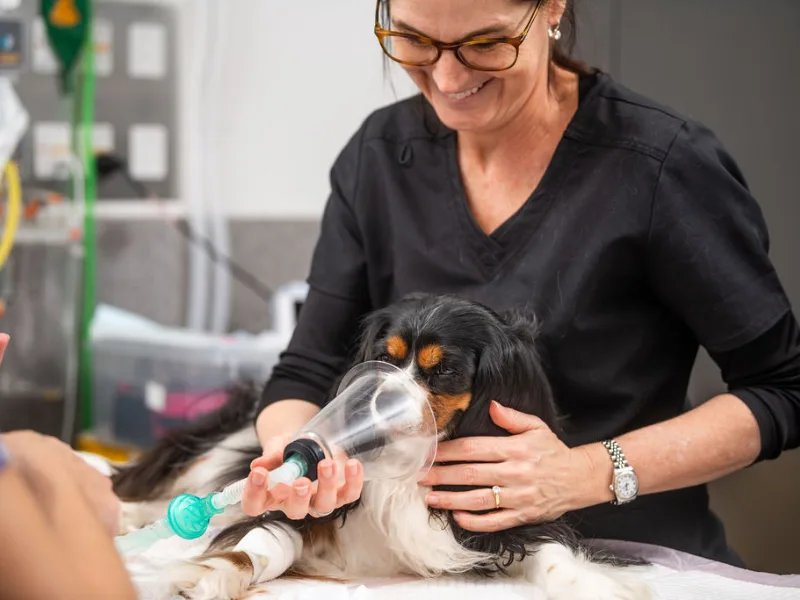
We assess each patient individually, considering their health history, age and any concurrent medical conditions, to tailor the anaesthetic approach to their specific needs.

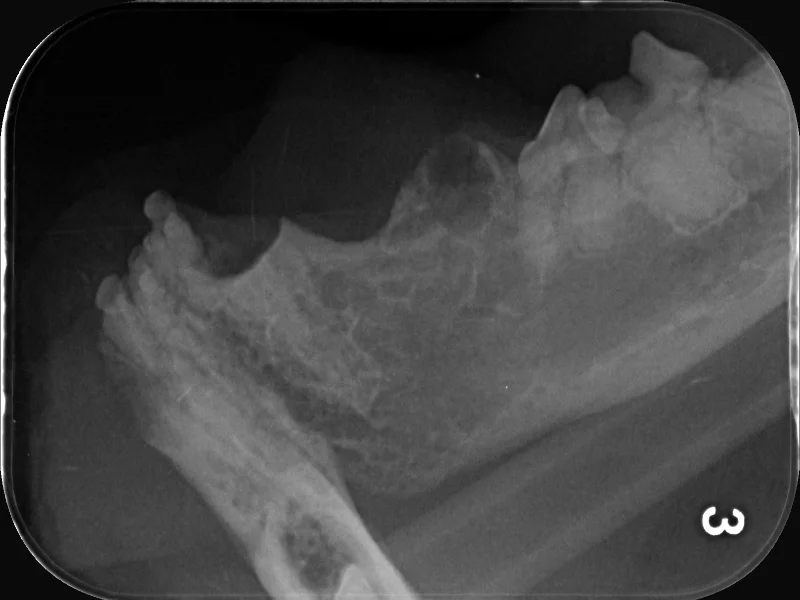
Dental radiographs can appear perfectly fine on the screen but may fail to reveal the necessary information for a proper assessment. Small shifts in angle, limited access inside the mouth or an x-ray plate that does not sit quite where it should can all change what appears in the image and impact the reliability of the interpretation. These are just some of the ways pet dental imaging can go wrong, and they are far more common in day-to-day practice than you might realise.
At Advanced Animal Dentistry, we work closely with veterinarians and often review images that don’t quite show the anatomy we need to see. Pet dental X-rays take time and experience to master, and uncertainty in acquisition or interpretation of images can slow the process significantly. We want to reduce that uncertainty and improve efficiency in this space. Here, we outline the problems you’re most likely to encounter and what they mean.
“Without dental imaging, more than half of your pet’s teeth — the parts below the gumline — remain invisible and potentially harbour pain.”
Why angle affects what you see
The angle of the X-ray beam plays a major role in how accurately a tooth is represented. Even small changes can make a tooth appear longer or shorter than it truly is, or alter its relationship to surrounding structures. As the beam angle shifts, neighbouring anatomy moves across the radiograph and may obscure the region you’re trying to assess. When used purposefully, however, this same effect can help bring pathology into clearer focus.
Each region of the mouth presents its own challenges. The curvature of the palate, the position of adjacent teeth, and the natural contours of the jaw all influence which parts of the beam reach the area of interest. If the beam passes through these structures at an unfavourable angle, they may overlap in ways that hide or even mimic disease.
Recognising how beam angle, anatomy, and radiographic appearance interact makes it far easier to distinguish true pathology from artefacts created by positioning.
Common issues in dental imaging
Dental radiographs can have a range of distortions depending on the angle and access, and these patterns are well recognised in practice. Elongation, foreshortening and overlapping roots can alter how the tooth is presented on the screen, and it is not always obvious that the view has been affected until the image is compared with what was seen clinically. Some of other issues we’ve encountered include:
Not capturing the entire tooth
Generally we recommend at least 3mm of tissue beyond the entire root apex be included on the radiograph.
Not taking additional views when unsure
Don’t stop at one radiograph if you are not sure. More images mean there are more things to compare.
Using damaged or dirty plates
Plates that are scratched or contaminated will reduce image quality and can create artefacts that either mimic pathology or hide it.
Expecting X-rays to tell the whole story
Radiographs are only one part of the assessment. Photographs, charting and the clinical exam are also essential and help place the image in context.
“A clean smile doesn’t always mean you’re out of danger — X-rays often expose hidden infections, root fractures or bone loss missed by visual exams.”

Reading the image in context
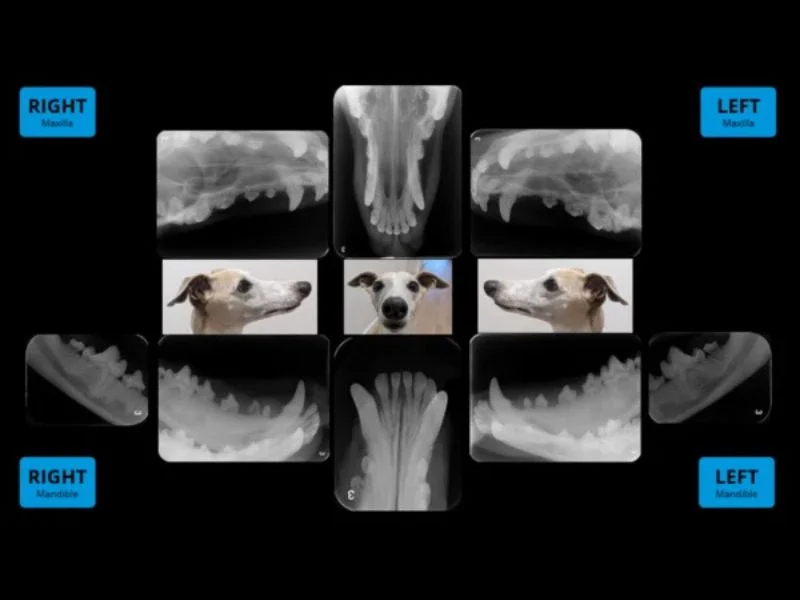
The standard way to present and display dental radiographs is called Labial mounting. With this method the radiographs are oriented so the crowns of the maxillary teeth face down and the crowns of the mandibular teeth face up. When oriented like this, the radiographs are viewed as if from the outside of the patient, with the right side of the patient on the left and vice versa.
Maintaining this standard orientation allows for consistent interpretation and clear communication between clinicians, particularly when cases are reviewed or referred.
The limits of radiography
Dental X-rays are a valuable part of oral assessment, but they cannot show every aspect of disease. Some changes in bone or soft tissue are too early or too subtle to appear on a standard radiograph, and certain lesions simply do not have a clear radiographic signature at all. Even a well-taken image can leave questions unanswered when the anatomy is complex or when the clinical findings do not line up with what can be seen.
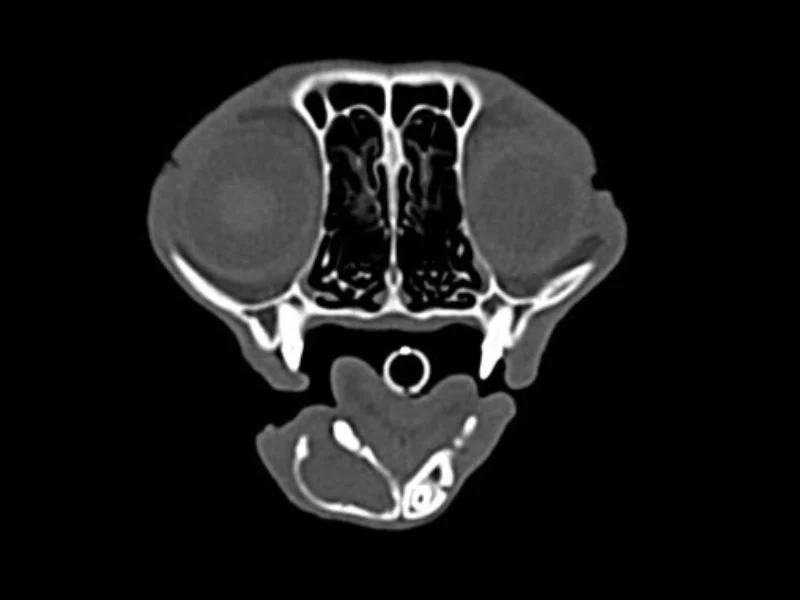
In these situations, further imaging or other testing may be needed. CT scans can reveal structures that lie beyond the reach of dental X-rays and help clarify findings that remain uncertain on standard views.
Recognising when an X-ray image may not be showing the full picture is an important clinical skill. Noticing these patterns helps guide when to investigate further, when to seek comparison and when another view may offer more clarity.
Building better outcomes through better imaging
At Advanced Animal Dentistry, we are building a suite of practical resources to help veterinarians strengthen their pet dental imaging skills. Our recent article on understanding the bisecting angle offers a starting point, but there’s more for those who want detailed guidance.
If you need assistance with image review or have a case that would benefit from specialist support, please contact us. To refer a patient, complete the referral form here.