In veterinary dentistry, discomfort is often accepted as part of the job rather than a signal that something in the workflow might need to change. The reality is that it is physically demanding work, but with the correct setup, technique and positioning, it’s possible to walk out of surgery each day feeling fine rather than as though you’d run a 10km marathon while carrying 10kg weights. Simple adjustments to ergonomics in your practice can make a big difference.
At Advanced Animal Dentistry, extractions, root canal therapy and oral surgery are what we do every day. We spend a substantial amount of time performing procedures, and we would not be able to sustain this work long term without doing things the best possible way. Here is our practical guide for veterinarians on how to keep dental work more ergonomic in general practice.
“In veterinary dentistry, discomfort is often accepted as part of the job rather than a signal that something in the workflow might need to change.”
The results of poor ergonomics
When we talk about the detrimental effects of poor ergonomics, we’re rarely referring to an acute injury. Most issues develop gradually and tend to affect the back, neck or wrist. Many vets report fatigue and discomfort after performing multiple dental procedures, particularly early in their careers. This was certainly my experience. I often felt sore and fatigued after a single procedure, but with experience, a better working environment and refined technique, that changed.
Over time, the effects of poor ergonomics can present in several ways, including:
- Progressive fatigue and reduced endurance
- Repetitive strain injuries, such as carpal tunnel symptoms linked to poor wrist positioning
- Persistent low-grade musculoskeletal pain that becomes a regular feature of dental days
- Increasing stiffness or discomfort during and after procedures, even when case complexity has not changed
Why are dental extractions such physically demanding procedures?
Dental extractions are physically demanding largely because of the forces involved, particularly in large dogs with large, well-anchored teeth. These cases require sustained pressure, precise control and prolonged positioning, often over extended periods of time. When extractions become more complex or time-consuming, the physical load on the clinician increases accordingly.
The way in which force is applied matters. When you rely on brute strength rather than technique, the physical strain escalates. Poor positioning and inefficient force direction place unnecessary load through the hands, wrists and upper body. Meanwhile, a well-developed technique reduces that demand, leading to more seamless procedures regardless of the clinician’s physical build.
This is particularly relevant in general practice, where complex extractions are often performed without putting thought into the ergonomic setup of the procedural space. In these settings, physical strain is less about the procedure itself and more about how the clinician must work around the patient and available tools.
“Simple adjustments to ergonomics in your practice can make a big difference.”
Clinical setup that makes dental work easier on the body
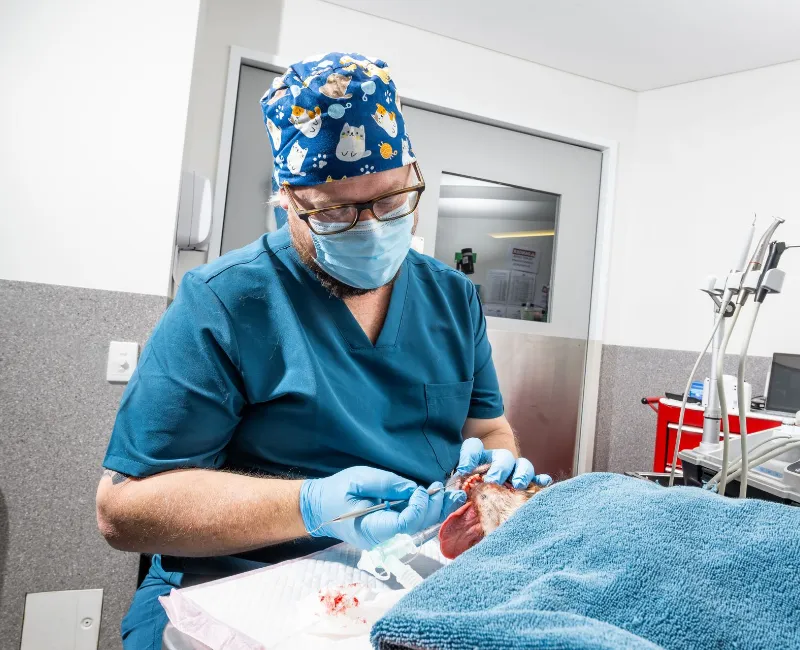
One of the most significant ergonomic factors in veterinary dentistry is access to the patient’s head. You need to be able to work from the front of the patient and from either side without obstruction. In many practices, dental procedures occur in prep areas rather than a more specifically designed area, which can limit how the space is set up. When access is restricted, the clinician is forced into compromised positions that place unnecessary strain on the body.
A common issue is the placement of the anaesthetic machine and associated tubing. For many procedures, this equipment is positioned at the front of the patient, but during dental work, it can restrict movement around the head.
Placing the anaesthetic machine behind the patient, with tubing directed toward the mouth and the dental machine to the side, creates a clear working zone. This allows you to reposition as needed, depending on whether you are working on the upper or lower jaw.
Freedom of movement is critical for maintaining posture and applying force efficiently. Dental surgeries often require the clinician to change position throughout. When movement is restricted, force is applied from awkward angles, increasing strain through the wrists, shoulders and back.
Seating, tables and instrument handling
When it comes to seating, a good saddle chair is invaluable because it allows you to sit properly without needing to stand and hunch over for extended periods. Saddle chairs position the hips forward and open, which supports a neutral spine rather than a flexed or hunched posture. There is an adjustment period with limited tolerance for new users, and I certainly experienced this myself, but they are genuinely non-negotiable in surgery. Once you’ve adapted, the increase in comfort and endurance is noticeable. Proper sizing is important, and different sizes and shapes are available to suit individual needs.
Tables also matter. Fixed-height tables force the clinician to adapt their posture to the patient when it should be the other way around. Height-adjustable tables allow positioning to suit patients of all sizes without excessive bending or reaching, and they accommodate clinicians of different heights in the same space. Adjusting the table reduces shoulder elevation, spinal flexion and awkward arm angles. This setup isn’t always possible, but where it is, it makes a huge ergonomic difference.
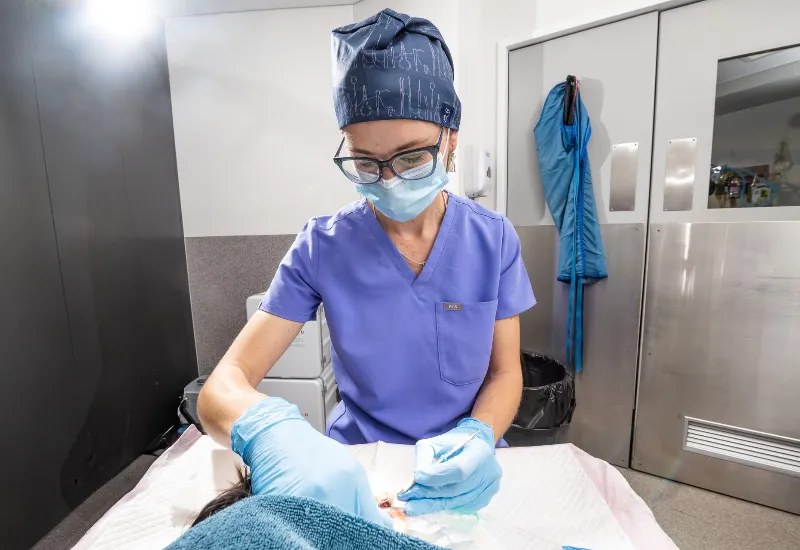
Correct instrument handling is also a game-changer. Many veterinarians tend to rely on wrist and hand strength rather than controlled movement. Sustained wrist flexion significantly increases the risk of repetitive strain injuries such as carpal tunnel symptoms. The right technique keeps the wrist straight, with force generated from the forearm and elbow rather than the hand. Rotation should come from the forearm, not the wrist, and grip must be appropriate for the instrument being used. At Advanced Animal Dentistry, we are actively involved in delivering hands-on training that focuses on technique, ergonomics and clinical confidence to help veterinarians feel comfortable performing dentistry long-term.
“Veterinary dental procedures do not have to be physically exhausting or damaging.”
Protecting longevity in veterinary dentistry
Developing better technique and having the right equipment has made it possible for me to do this work every day and stay comfortable doing it. Recently, I had a full schedule that started with consults until around 10.30 am, followed by almost nonstop surgical procedures through to 9.00 pm. While it was mentally tiring, I walked out that evening feeling physically fine.
For new veterinarians wondering how to protect their bodies while performing dental procedures, I recommend establishing good habits early. Pay attention to posture, positioning and technique. Clinical Pilates has been central to maintaining core strength and postural support, as well as building resilience.
Veterinary dentistry you can sustain
Veterinary dental procedures do not have to be physically exhausting or damaging. At Advanced Animal Dentistry, our passion for oral health extends to the wellbeing of each clinician as well. If you’d like to know more about optimal ergonomic practices, contact our friendly team today.
To refer a patient, complete the referral form here.