


Removing complex teeth safely and with minimal impact.
Patient Information
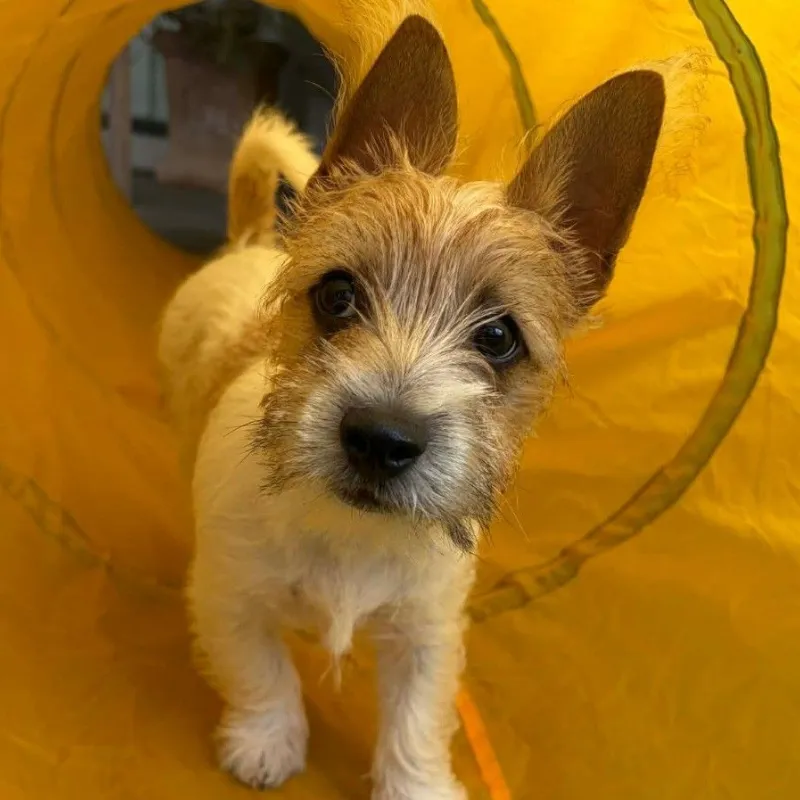
Name:Teddy
Age: 6 months
Breed: Jack Russell
Gender: Male
Presenting Problem
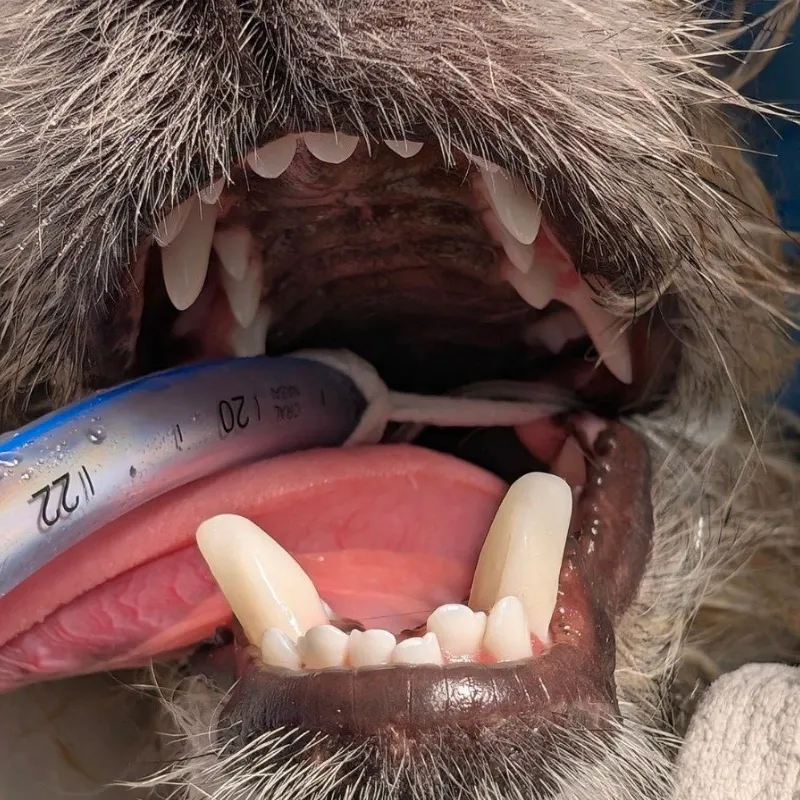
When adorable little Teddy first arrived at AAD, he had a tight bite, a narrowed left maxillary diastema and linguoversion of the lower canine teeth. This meant his lower canine teeth were positioned too far inward and were contacting the roof of his mouth, causing discomfort and creating an abnormal bite relationship.
Left untreated, this kind of traumatic malocclusion can keep rubbing against the roof of the mouth and cause ongoing pain and damage as the dog grows.
“Left untreated, this kind of traumatic malocclusion can cause ongoing pain and damage as a dog grows.”
Diagnostics and Treatment
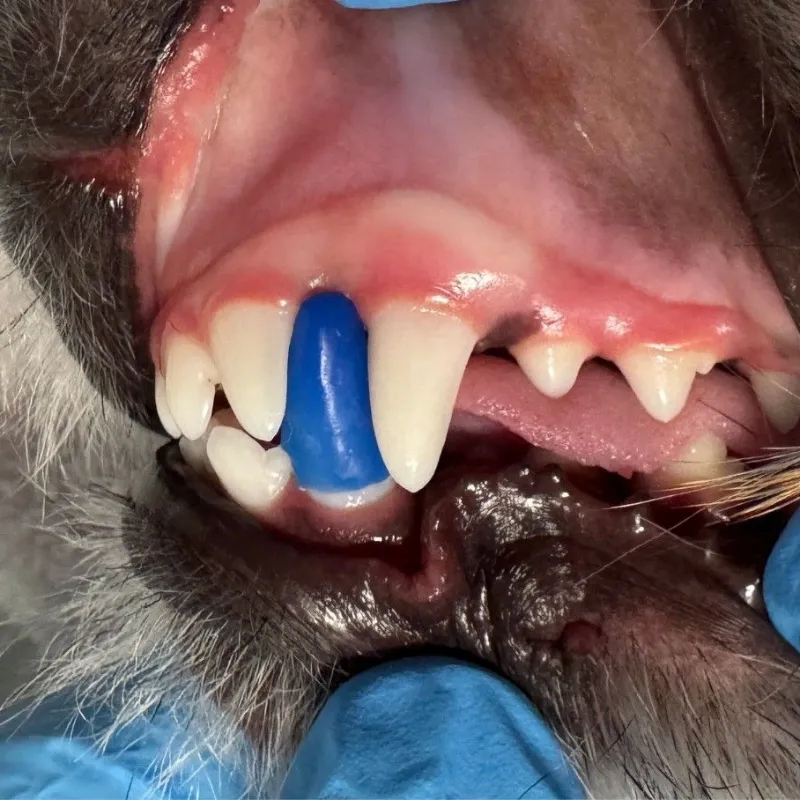
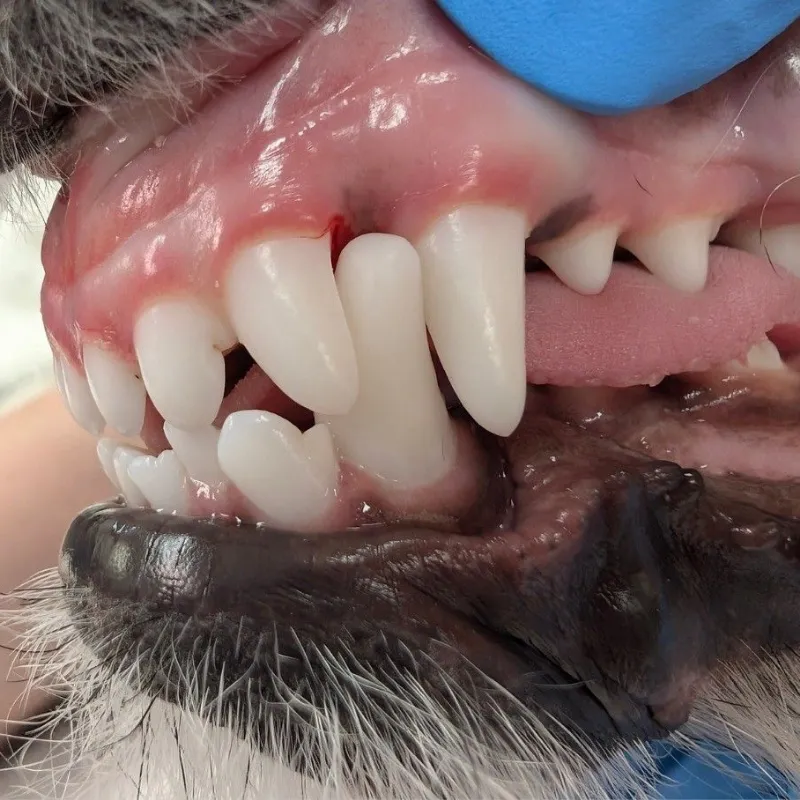
After completing an oral examination and assessment of Teddy’s bite, we recommended orthodontic treatment using crown extensions. It’s a minimally invasive approach, and it was chosen to help guide the teeth into a healthier position while preserving natural tooth structure.
The crown extensions, made from acrylic or composite material, were carefully attached to Teddy’s lower canine teeth. When Teddy closed his mouth, the extensions created a gentle and controlled force that gradually encouraged the lower canines into a safer and more comfortable position within the narrowed diastema. In cases like Teddy’s, this approach can also assist with subtle movement of the upper canine teeth where spacing is limited.
Teddy came back for a series of check-ups so we could keep an eye on how his teeth were moving and ensure everything was still in place and working as it should.
As can sometimes happen with orthodontic appliances, Teddy managed to damage his crown extensions during treatment and they needed to be replaced. The initial extensions were white, while the replacement extension was blue. Breakage is a known risk during orthodontic treatment, which is why dogs like Teddy are monitored closely and provided extensive follow-up care, particularly when they are young and active.

Outcome
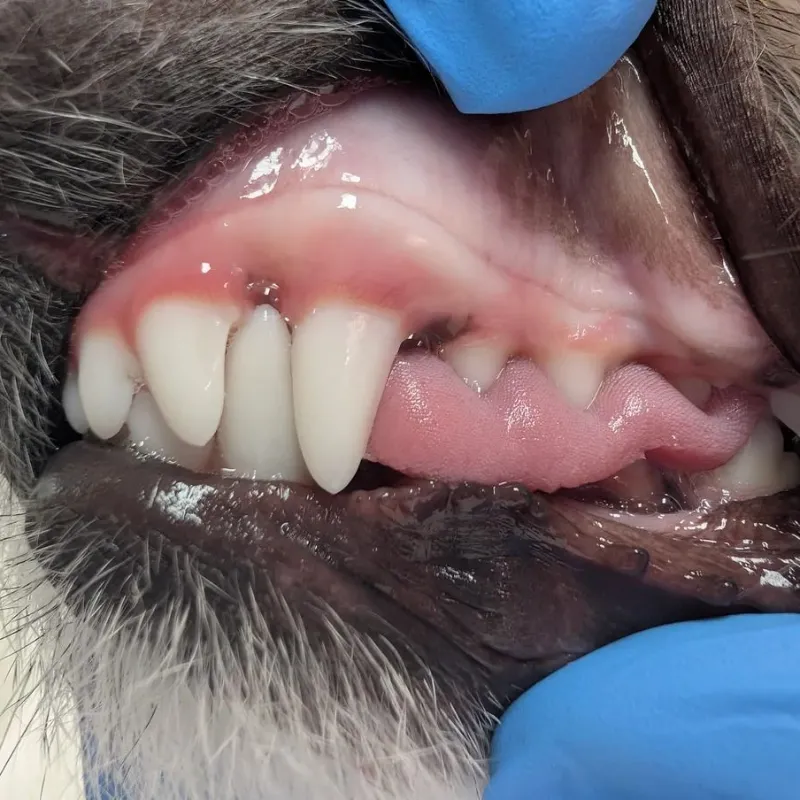
Once the teeth had moved into a more appropriate position, they were able to remain there naturally without the need for long-term appliances, and so the crown extensions were removed under a short anaesthetic. Teddy’s treatment successfully reduced the traumatic contact with the roof of his mouth and resulted in a more comfortable and functional bite.
Teddy handled his treatment fantastically and was an absolute superstar from start to finish.
“Crown extensions can be a very effective, minimally invasive option for guiding teeth into a healthier position.”
Veterinary Comments
“Crown extensions can be a very effective, minimally invasive option… and despite managing to damage his extensions during treatment, Teddy progressed very well and achieved a comfortable, functional outcome.”


