Jaw Fractures

Overview & causes

Jaw fractures in pets often result from trauma and require specialised care. Our focus is on preserving function and anatomy in these cases.

The oral cavity’s high vascularity aids in fracture healing, provided the fixation is reasonable.

However, even with the bones repairing and healing back together, return to function is not guaranteed. Successful treatment not only relies on the repair and healing of the fracture but also on restoring normal and functional occlusion.

Common causes of jaw fractures in pets include traumatic events such as falls or accidents, inter-dog aggression, dental extractions (especially in older animals) and other external forces resulting in unforeseen damage.

“Restoring normal occlusion is just as important as repairing the fracture itself.”

Challenges & Factors

Oral fractures present challenges due to bacterial contamination, difficult access and periodontal disease. Repair centres on preserving oral function, preserving teeth and ensuring proper occlusion.

Immediate relief involves temporary stabilisation, usually with a muzzle. A comprehensive clinical assessment follows to determine the extent of the damage, always requiring dental X-rays and often a CT scan for full evaluation.

Specialised care is crucial for animals with complex health conditions affecting anaesthesia risks.

Many patients with jaw fractures have also suffered other trauma, especially to the head, making their care complex. Some require stabilisation of more severe injuries before attempting jaw fracture repair.

Types of jaw fractures & repair considerations

Maxillary fractures are usually less frequent, and conservative treatment is possible. If the maxillary fractures are not significantly displaced, the surrounding tissues can often stabilise these fragments well.

Surgical closure of any soft tissue injuries will greatly enhance stabilisation. Severe cases may require interdental wires and acrylic splints.

Mandibular fractures are common in companion animals.

There are several points to consider in selecting a repair method:

  • The dental arcade is the tension side of the fracture
  • The final occlusion is the most important factor in fixation
  • Mandibular tooth roots go virtually to the ventral border of the mandible and are unlikely to be missed with fixation devices
  • Any damage to the teeth during repair will cause long-term complications
  • The maxillary teeth occlude to the outside of the mandibular teeth

What we do -Repair techniques

Successful repairs often use interdental wiring techniques combined with acrylic splints, with variations based on fracture type and position.

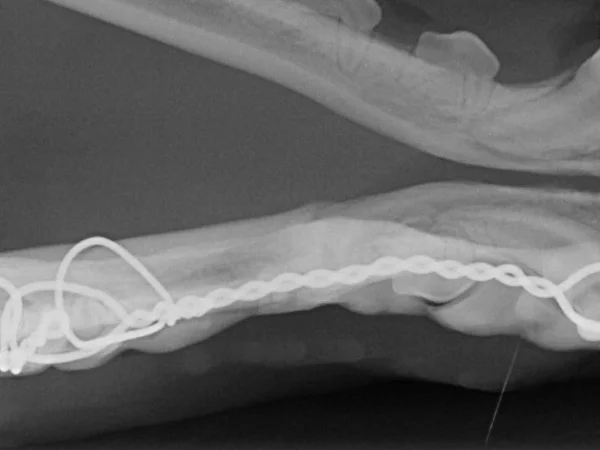
Cerclage wiring for symphyseal separation
Symphyseal separation is common in cats and may be associated with TMJ luxation or caudal mandibular fractures.  Cerclage material placed behind the canine teeth is the best technique for uncomplicated separations. This has traditionally been performed with wire. However, modern synthetic sutures are suitable and, in many cases, superior to wire. Complete, firm stabilisation is not necessary.

Figure of 8 wires around the canines disrupts occlusion, making inter-canine bonding a better choice for complicated separations.

Interosseous wiring
Wires can be placed to stabilise the fracture providing care is taken to avoid dental damage. Radiographs are taken with markers in place to ensure that tooth roots are avoided, and small holes are made with drills or small pins for the wire placement.

Interdental wiring
This involves placing wires around adjacent or multiple teeth to stabilise the fracture. The wires are placed below the enamel bulge of the tooth (at the gum margin) to prevent them from slipping off. If this is unsuccessful, a small amount of composite resin is placed to hold the wire, or a small notch can be made in the tooth.

There are several wiring techniques, but they all involve tightening a series of loops around the teeth, which then act as a fixation device. An acrylic splint is often used over this wire to increase the effect.

Inter-canine bonding
This is a very useful technique for multiple unstable fractures, especially those involving the caudal mandible of cats.

“Jaw fracture treatment requires careful planning to preserve both function and anatomy.”

What we do Post-operative care

After surgery, it’s crucial to maintain oral hygiene due to the rapid accumulation of bacteria in the mouth. This risk increases around intra-oral appliances, potentially leading to tissue infection. Regular mouth rinsing and eating foods that leave minimal residue are essential.

Most patients with jaw fractures recover well and usually resume normal activities within about 6 weeks of healing. While the recovery period may be challenging for some, the majority regain normal interaction with their families and resume eating and drinking normally. Ensuring continued monitoring and following post-operative care instructions diligently contribute to successful outcomes.

FAQs

What causes jaw fractures in pets and how are they identified?

Jaw fractures are most commonly caused by trauma such as falls, accidents or inter-dog aggression. They may also occur following dental extractions, particularly in older animals. Diagnosis in veterinary dental care involves clinical assessment along with dental X-rays and often CT imaging to fully evaluate the injury.

Why is restoring occlusion important in jaw fracture treatment?

Restoring normal occlusion ensures that the teeth align properly and function as they should. Even if the bone heals, poor occlusion can affect eating, comfort and long-term animal oral health. This is why it is a key focus when selecting a repair method.

What challenges are involved in treating jaw fractures?

Jaw fractures can be difficult to manage due to bacterial contamination, limited access and the presence of periodontal disease. Many patients may also have other injuries, particularly to the head, which can complicate treatment. Careful planning is required to address both the fracture and any additional trauma.

What repair techniques are used for jaw fractures in veterinary dental care?

A range of techniques may be used depending on the type and location of the fracture. These include interdental wiring, interosseous wiring, cerclage wiring and acrylic splints to stabilise the area. Each approach is chosen to minimise damage to teeth while supporting proper healing.

What does recovery look like after jaw fracture surgery?

Most pets recover well and typically return to normal activities within about six weeks. Maintaining oral hygiene is important during healing, especially around any intra-oral appliances where bacteria can accumulate. Ongoing monitoring and appropriate care support a stable recovery and healthy function.

Key Takeaways

Trauma-Related Injuries

Jaw fractures in pets are most often caused by trauma such as accidents, falls or aggression, and require careful veterinary dental assessment to support animal oral health.

Complex Repair Considerations

Successful treatment depends not only on bone healing but also on restoring proper occlusion and preserving teeth to maintain normal function.

Detailed Diagnostic Process

Comprehensive evaluation includes dental X-rays and often CT scans to fully understand the fracture and guide appropriate treatment.

Recovery and Ongoing Care

With proper repair and post-operative care, most pets recover well, though maintaining oral hygiene and monitoring healing is essential throughout recovery.

Next steps

For Pet Owners

Are you concerned about your pet’s dental health? Call 1300 866 848 or fill out the contact form. We’ll coordinate with your primary vet to ensure the best outcome.

For Vets & Nurses

We’re here to help. If you’d like to refer a patient, please call us at 1300 866 848 , complete the referral form or email us with a brief case summary, relevant radiographs and lab results.

For advice and treatment guidance, email us with a brief case summary, relevant radiographs and lab results.


Refer a Patient Contact Us

Advanced Veterinary Dental Services

A comprehensive range of dental and oral surgery treatments.

Contact Us    Refer A Patient
Complex Anaesthesia

We assess each patient individually, considering their health history, age and any concurrent medical conditions, to tailor the anaesthetic approach to their specific needs.

Surgical Extractions

Removing complex teeth safely and with minimal impact.

Vital Pulpotomy

A vital pulpotomy is a time-sensitive procedure used to preserve the life of a tooth when the pulp becomes exposed due to trauma or dental treatment.

Jaw Fractures

Jaw fractures in pets require precise treatment to restore both structure and function, with a strong focus on proper bite alignment.

Periodontal Treatment

Periodontal treatment goes beyond routine dental care to address the deeper damage caused by advanced gum disease.

Oral Surgery

Pet oral surgery can help treat dental problems, injuries, and other conditions affecting your pet’s mouth. Learn about the available procedures and how they can improve your pet’s comfort and oral health.

Dental and Oral Imaging

Dental and oral imaging helps veterinarians identify dental problems that may not be visible during a routine examination. Learn how these imaging techniques support accurate diagnosis and effective treatment for your pet.

Root Canal Therapy

Root canal therapy can help save a damaged or infected tooth while relieving pain in pets. Learn how this dental procedure works and how it can help preserve your pet’s natural teeth and oral health.

Gingivoplasty

This procedure involves reshaping gum tissue to guide the eruption of canine teeth into a correct position, preventing traumatic occlusion and avoiding more invasive treatments.

Crown Height Reduction

Reducing the height of misaligned canine teeth and protecting the exposed pulp with a filling helps prevent chronic pain, preserve jaw structure and avoid extraction.

Inclined Plane – Crown Extensions

Orthodontic appliances like inclined planes or crown extensions can reposition misaligned canine teeth, preventing trauma and preserving tooth function without altering their shape.

Dog Braces (Orthodontics)

To address mesioverted  (‘lanced’ maxillary canine teeth) and manage linguoversion when the maxillary diastema (the space between the third incisor and canine teeth) is too narrow.

Restorations

Restorative dentistry repairs damaged teeth in pets, often using crowns, veneers and fillings. These procedures restore dental structure and function, ensuring long-term oral health.

Professional Dental Cleaning

Thorough cleaning and examination under anesthesia remove plaque and calculus, preventing periodontal disease and ensuring long-term oral health in pets.

Mandibulectomies and Maxillectomies

These surgeries involve partial or complete removal of the jaw to treat malignant oral tumours. Treatment options vary and may include surgery, chemotherapy or radiation.

Crown Amputation for Tooth Resorption

This procedure, often used for tooth resorption, involves removing the tooth crown while leaving the resorbing root remnant intact. It’s less invasive and used in cases where traditional extraction is no longer possible. Regular follow-up is recommended.