


We assess each patient individually, considering their health history, age and any concurrent medical conditions, to tailor the anaesthetic approach to their specific needs.
Periodontal disease, or Perio, is the predominant concern in Veterinary Dentistry when it comes to dogs. Studies consistently reveal that a striking 80-85% of dogs aged three years or older contend with some degree of Periodontal disease, making it a pervasive and critical focus in veterinary care. Importantly, this disease’s impact intensifies with age, signifying its chronic and progressive nature.
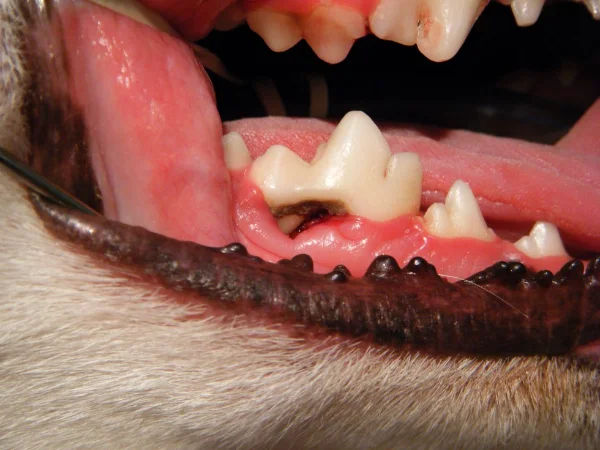
The Role of Plaque in Periodontal Disease
Plaque is the primary cause of periodontal disease. This seemingly harmless substance accumulates on the teeth and is composed of a complex mix of bacteria. These bacteria form a biofilm—a dense community working together to thrive.
When plaque forms, it interacts with the immune system of the surrounding tissue, primarily affecting the gums or gingiva.
This interaction can lead to inflammation and various stages of periodontal disease if not addressed properly. The most effective method of plaque control available to pet owners is brushing. Brushing your cat or dog’s teeth daily reduces their risk of periodontal disease and helps maintain optimal oral health.
Periodontal Disease Staging
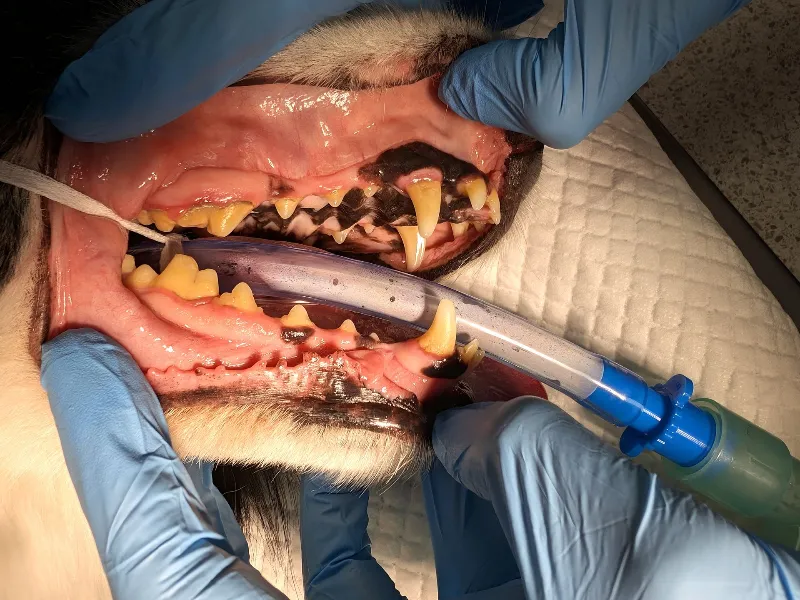
Stage 1 – Gingivitis
Mild Periodontal Disease is characterised by the early changes occurring in the gingiva (gums), mostly with minimal effects on the bone surrounding the teeth.
Gingivitis may be present in localised areas, and occasionally generalised throughout the mouth. Probing around the teeth reveals minimal attachment loss, and radiographs taken of the teeth and surrounding areas reveal minimal, if any, bone loss.
Intervention at this time should reverse the gingivitis and slow or even stop the progression of any periodontitis present.
NB: Periodontal disease staging is most accurate when performed under general anesthesia, after intraoral radiographs and periodontal probing.

Stage 2 – Early Periodontal Disease
Early Periodontal Disease is characterised by the changes occurring in the gingiva (gums) with effects also on the bone surrounding the teeth.
Gingivitis is present and more generalised throughout the mouth. Probing around the teeth reveals attachment loss and pocketing. Radiographs taken of the teeth and surrounding areas reveal some bone loss, less than 25% of the root length. Some teeth may be considered for extraction. These issues may be localised or generalised.
Intervention at this time should reverse the gingivitis (only) and can slow the progression of any periodontitis present.
NB: Periodontal disease staging is most accurate when performed under general anesthesia, after intraoral radiographs and periodontal probing.
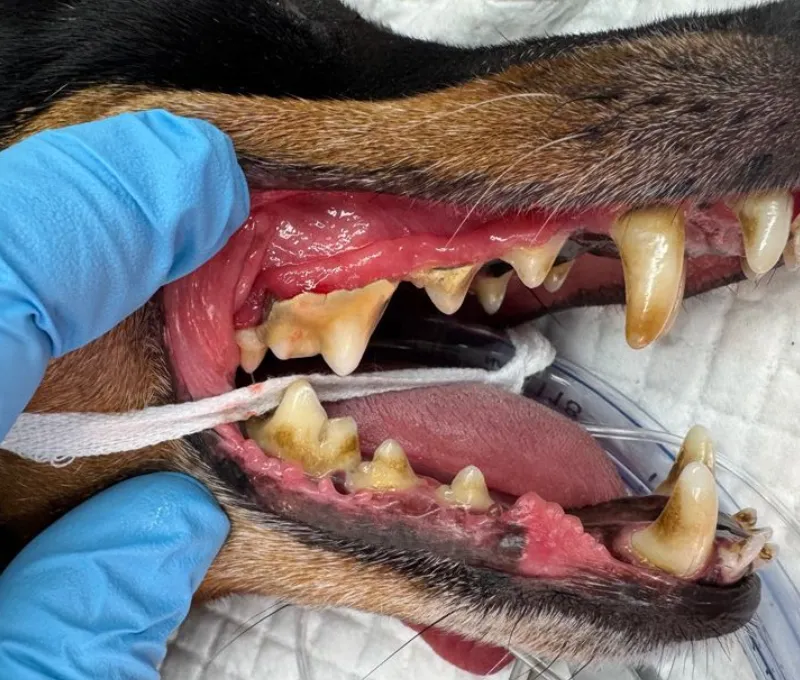
Stage 3 – Established Periodontal Disease
Established Periodontal Disease is characterised by the changes occurring in the gingiva (gums) with most effects on the bone and tissues surrounding the teeth.
Gingivitis is present and frequently generalised throughout the mouth. Probing around the teeth reveals attachment loss, pocketing and in some teeth, furcation exposure. Radiographs taken of the teeth and surrounding areas reveal bone loss, often 25-50% of the root length. Teeth are often considered for extraction, and some teeth may have already been lost. These issues may be localised or generalised.
Intervention at this time should reverse the gingivitis (only) and can slow the progression of any periodontitis present. It is difficult to stop the progress of Periodontitis when it has become quite established.
NB: Periodontal disease staging is most accurate when performed under general anesthesia, after intraoral radiographs and periodontal probing.
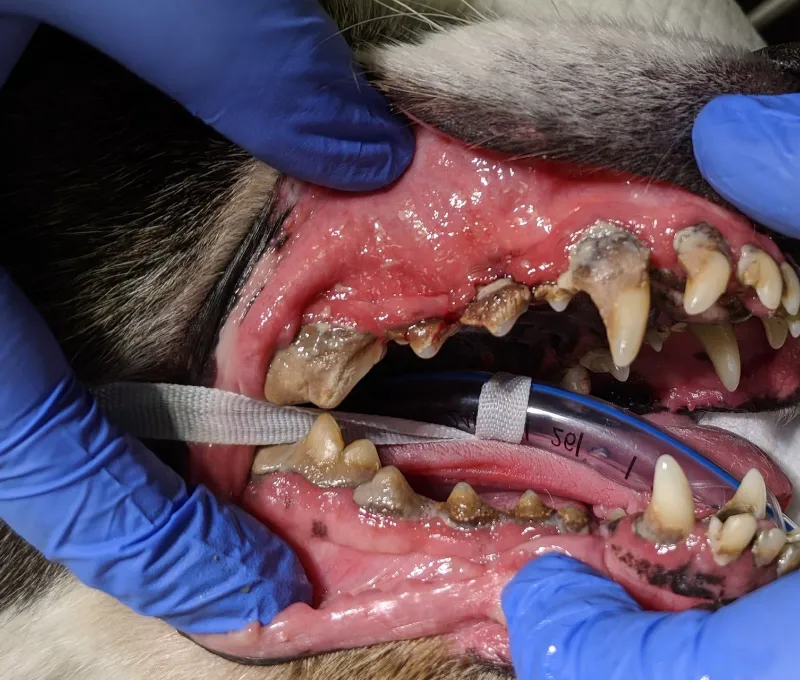
Stage 4 – Established Periodontal Disease
Severe Periodontal Disease is characterised by the changes occurring in the gingiva (gums), with most effects on the bone and tissues surrounding the teeth.
Gingivitis is present and frequently generalised throughout the mouth. Probing around the teeth reveals attachment loss, pocketing, furcation exposure and some tooth mobility. Radiographs taken of the teeth and surrounding areas reveal bone loss, greater than 50% of the root length. Teeth are frequently considered for extraction, and some teeth may have already been lost. These issues may be localised or generalised.
Intervention at this time should reverse the gingivitis (only) and can slow the progression of any periodontitis present. It is difficult to stop the progress of Periodontitis when it has become quite established.
NB: Periodontal disease staging is most accurate when performed under general anesthesia, after intraoral radiographs and periodontal probing.

















