
Dog Braces (Orthodontics)

Dog braces (orthodontics) or masal chains can be used to correct poorly positioned and traumatic maxillary (upper) canine teeth ensuring proper bite function while maintaining tooth shape and size. We typically perform orthodontic procedures in young patients during or just after the eruption of their permanent teeth. Most often, we use these treatments to reposition traumatically positioned canine teeth.
Treatment with dog braces

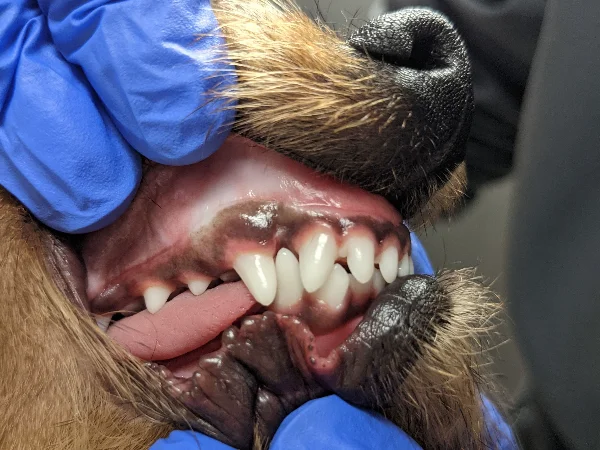
A masal chain appliance (dog braces) is commonly used to address mesioverted or ‘lanced’ maxillary canine teeth and to manage linguoversion when the maxillary diastema (the space between the maxillary third incisor and canine teeth) is too narrow. This appliance helps widen the space available to accommodate the mandibular canine tooth.

When the maxillary canine tooth points forward, it narrows the space for the mandibular canine to erupt into. This frequently results in linguoversion of the mandibular canine teeth with subsequent trauma to the roof of the mouth from these teeth.

“Treatment typically lasts between 4 to 6 weeks, with regular visits required.”
Orthodontic Solutions for Malocclusion

Not every patient with a malocclusion is suitable for orthodontics. For those who are, these treatments provide an excellent long-term solution. They generally require less follow-up than treatments like crown height reduction and vital pulpotomy and are less invasive than extractions. Additionally, these procedures do not alter the size or shape of the teeth, preserving their full form and function. When successful, orthodontics will leave your pet with a functional and pain free mouth.

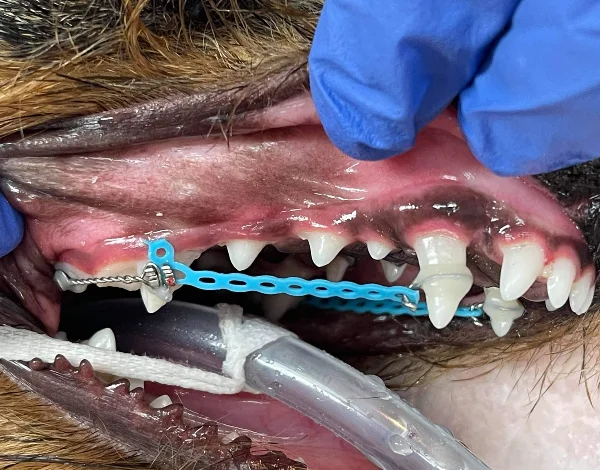
Orthodontic appliances for treating mesioverted maxillary canine teeth or widening the maxillary diastema apply a tipping force to reposition the maxillary canine tooth and expand the space between the maxillary third incisor and canine tooth. The masal chain is the most common appliance and is created directly in the patient’s mouth.
Orthodontic Technique for Maxillary Canine Adjustment

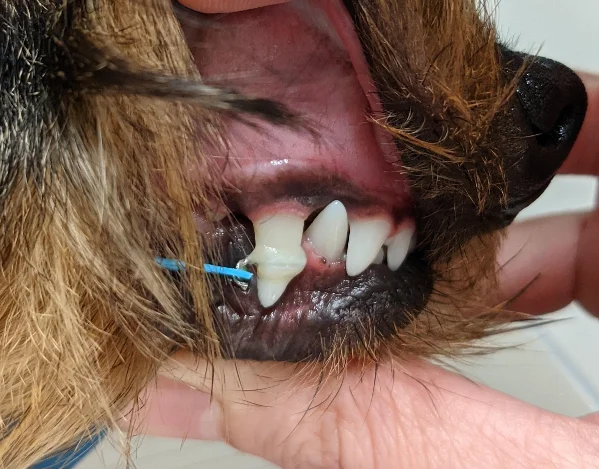
This orthodontic technique involves placing brackets on the maxillary fourth premolar and first molar teeth, which are then wired together to create a single anchor unit. A wire hook or similar device is attached to the maxillary canine tooth. An elastic chain connects the maxillary canine to the anchoring teeth, applying a distal tipping force to the maxillary canine.

Treatment typically lasts between 4 to 6 weeks, with regular visits required. During this period, the elastic chain may need tightening or replacement, usually achievable without sedation.

“Typically, a retainer is not needed, unlike with braces for people.”

Orthodontic Adjustment & Follow-Up

Over several weeks, the maxillary canine teeth are tipped distally (caudally) into a more correct position. Once the teeth align properly, we remove the appliance under a short anaesthetic. In many cases, a second orthodontic procedure may be necessary to correct the position of the mandibular canines if they are in a base narrow position (refer to inclined plane/crown extensions).

Typically, a retainer is not needed, unlike with braces for people. The canine teeth should lock into their correct position, providing a self-retaining effect (canine interlock).

Care & Maintenance for Orthodontic Appliances

For most patients, this procedure goes smoothly and is generally uneventful. However, the appliance is not indestructible, so it’s crucial to avoid any rough mouth play to prevent damage and avoid additional repair costs.

While wearing an orthodontic appliance, plaque build-up can occur more readily. Therefore, maintaining a higher level of homecare is essential.

This includes gently brushing around the appliance and using a gel or rinse designed to reduce plaque bacteria. These steps help to keep the mouth clean and fresh, preventing unpleasant odours and potential complications.

Meet the Author

Aaron Forsayeth

BVSc (Hons) MACVSc (Veterinary Dentistry)

Hi, I’m Dr Aaron Forsayeth, and I’ve had quite the journey in veterinary medicine. Originally, I never imagined myself pursuing dentistry.
I spent my initial years in general practice until a chance meeting with Dr Gary Wilson changed my career path. He inspired me to explore veterinary dentistry, and together, we co-founded Advanced Animal Dentistry in 2006. It’s ironic, considering I used to dread dental procedures, but with the right knowledge and skills, it became a passion that I absolutely love to this day.

FAQs

Do dogs really get “braces” — and what problems do they fix?

Yes, veterinary orthodontics can reposition traumatically positioned canine teeth (e.g., mesioverted/“lance” upper canines or base‑narrow lower canines) to restore a comfortable, functional bite—see Dog Braces (Orthodontics) and the condition explainer Linguoverted Canine Teeth.

How do dog braces work — and which type might my dog need?

Braces at AAD commonly use a masal chain appliance to apply a gentle distal tipping force to the upper canine (and widen the diastema) and, if the lower canines are base‑narrow, a second orthodontic step, such as an inclined plane or crown extensions, may be used—see Dog Braces (Orthodontics) and Inclined Plane – Crown Extensions.

What’s the best age to start, and how long does treatment take?

Orthodontics are typically performed in young dogs during/just after permanent tooth eruption, and a braces course often runs 4–6 weeks with chain checks/tightening and removal under a short anaesthetic. In many cases, no retainer is needed thanks to the natural canine interlock—see Dog Braces (Orthodontics) and Inclined Plane – Crown Extensions.

What home care is needed while my dog has braces?

You’ll need to avoid rough mouth play and step up plaque control (gentle brushing around the appliance and a gel/rinse) during treatment as outlined on Dog Braces (Orthodontics), with brushing tips on Brushing Your Dog’s Teeth and broader advice under Homecare.

Will my dog need anaesthesia — is it safe?

Adjustments to the chain are usually done without sedation, but appliance removal (and many orthodontic procedures) are performed under general anaesthesia with specialist monitoring—see the day‑of guide What to Expect and safety detail in Complex Anaesthesia.

What are the alternatives if braces aren’t the best fit?

Depending on age/anatomy, and goals, options include Inclined Plane/Crown Extensions (orthodontic), Crown Height Reduction with Vital Pulpotomy (definitive), or Mandibular Canine Extraction when necessary. Your vet dentist will map the pathway after assessment.

Key Takeaways

What they fix

An elastic‑chain “dog braces” appliance (masal chain) repositions mesioverted/‘lance’ maxillary canines and can widen the maxillary diastema to make room for the lower canine to prevent palate trauma and preserve tooth form and function.

When to treat

Best in young dogs during/just after permanent tooth eruption, when movement is predictable and minimally invasive options can avoid surgical solutions later.

Timeline & anaesthesia

Typical course is 4–6 weeks with chain checks often without sedation. The appliance is removed under a short anaesthetic, and a retainer is usually not required thanks to the canine interlock.

Home care matters

While the appliance is in, avoid rough mouth play and step up plaque control (gentle brushing plus a gel/rinse) to keep the device intact and the mouth odour‑free.

Next steps

For Pet Owners

Are you concerned about your pet’s dental health? Call 1300 866 848 or fill out the contact form. We’ll coordinate with your primary vet to ensure the best outcome.

For Vets & Nurses

We’re here to help. If you’d like to refer a patient, please call us at 1300 866 848 , complete the referral form or email us with a brief case summary, relevant radiographs and lab results.

For advice and treatment guidance, email us with a brief case summary, relevant radiographs and lab results.


Refer a Patient Contact Us

Advanced Veterinary Dental Services

A comprehensive range of dental and oral surgery treatments.

Contact Us    Refer A Patient
Complex Anaesthesia

We assess each patient individually, considering their health history, age and any concurrent medical conditions, to tailor the anaesthetic approach to their specific needs.

Surgical Extractions

Removing complex teeth safely and with minimal impact.

Vital Pulpotomy

A vital pulpotomy is a time-sensitive procedure used to preserve the life of a tooth when the pulp becomes exposed due to trauma or dental treatment.

Jaw Fractures

Jaw fractures in pets require precise treatment to restore both structure and function, with a strong focus on proper bite alignment.

Periodontal Treatment

Periodontal treatment goes beyond routine dental care to address the deeper damage caused by advanced gum disease.

Oral Surgery

Pet oral surgery can help treat dental problems, injuries, and other conditions affecting your pet’s mouth. Learn about the available procedures and how they can improve your pet’s comfort and oral health.

Dental and Oral Imaging

Dental and oral imaging helps veterinarians identify dental problems that may not be visible during a routine examination. Learn how these imaging techniques support accurate diagnosis and effective treatment for your pet.

Root Canal Therapy

Root canal therapy can help save a damaged or infected tooth while relieving pain in pets. Learn how this dental procedure works and how it can help preserve your pet’s natural teeth and oral health.

Gingivoplasty

This procedure involves reshaping gum tissue to guide the eruption of canine teeth into a correct position, preventing traumatic occlusion and avoiding more invasive treatments.

Crown Height Reduction

Reducing the height of misaligned canine teeth and protecting the exposed pulp with a filling helps prevent chronic pain, preserve jaw structure and avoid extraction.

Inclined Plane – Crown Extensions

Orthodontic appliances like inclined planes or crown extensions can reposition misaligned canine teeth, preventing trauma and preserving tooth function without altering their shape.

Dog Braces (Orthodontics)

To address mesioverted  (‘lanced’ maxillary canine teeth) and manage linguoversion when the maxillary diastema (the space between the third incisor and canine teeth) is too narrow.

Restorations

Restorative dentistry repairs damaged teeth in pets, often using crowns, veneers and fillings. These procedures restore dental structure and function, ensuring long-term oral health.

Professional Dental Cleaning

Thorough cleaning and examination under anesthesia remove plaque and calculus, preventing periodontal disease and ensuring long-term oral health in pets.

Mandibulectomies and Maxillectomies

These surgeries involve partial or complete removal of the jaw to treat malignant oral tumours. Treatment options vary and may include surgery, chemotherapy or radiation.

Crown Amputation for Tooth Resorption

This procedure, often used for tooth resorption, involves removing the tooth crown while leaving the resorbing root remnant intact. It’s less invasive and used in cases where traditional extraction is no longer possible. Regular follow-up is recommended.











