Teddy Traumatic Malocclusion

Patient Information

Name:Teddy
Age: 6 months
Breed: Jack Russell
Gender: Male
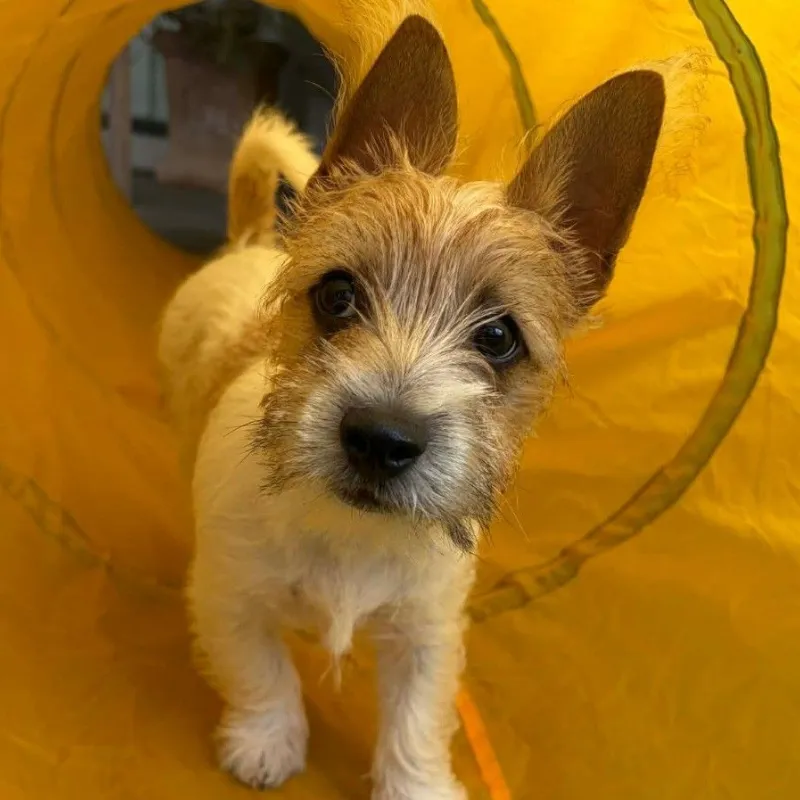
Small terrier puppy standing inside a bright yellow agility tunnel and looking at the camera.
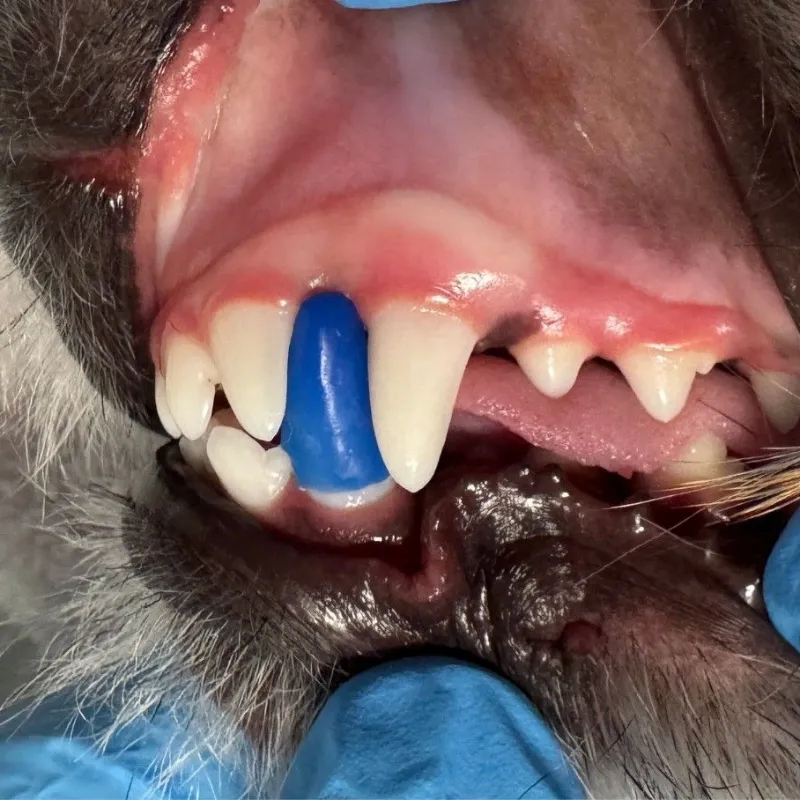
Close-up of a dog's mouth during dental work, showing a blue dental wedge between a canine tooth and the gum
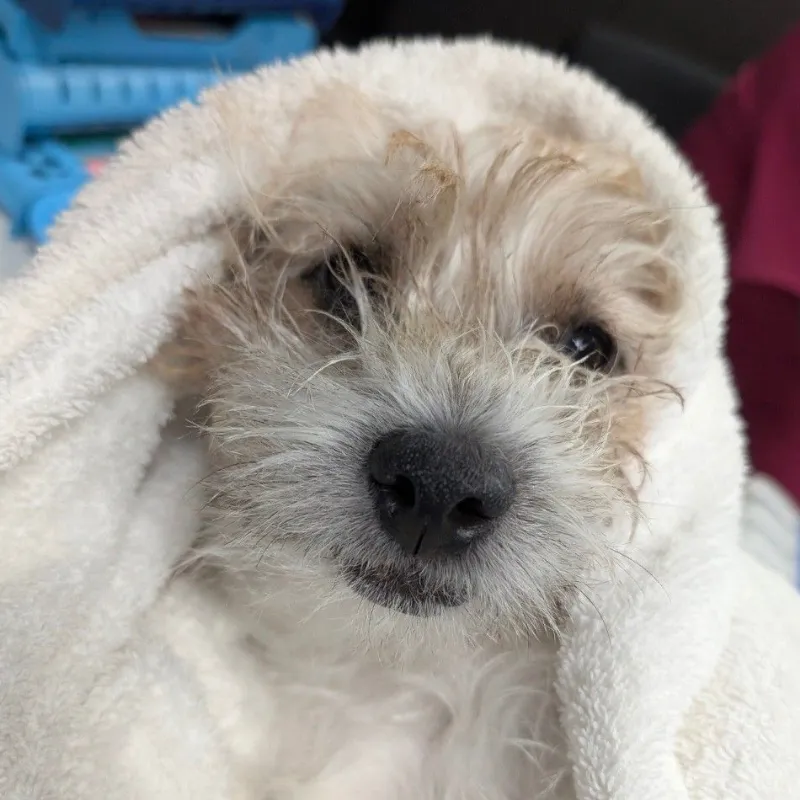
Small fluffy puppy wrapped in a white towel looking toward the camera.

Presenting Problem

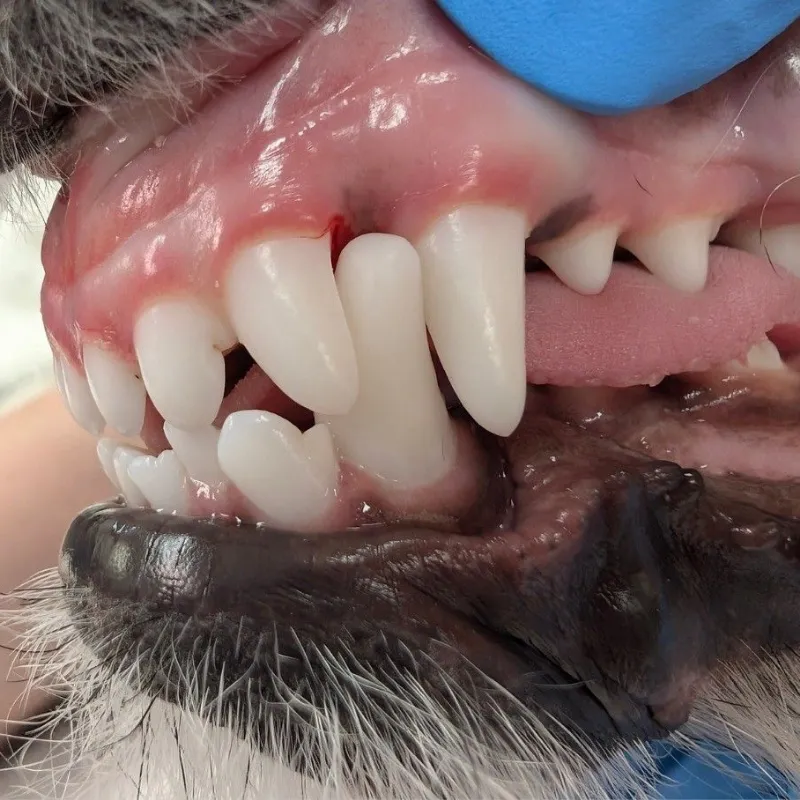
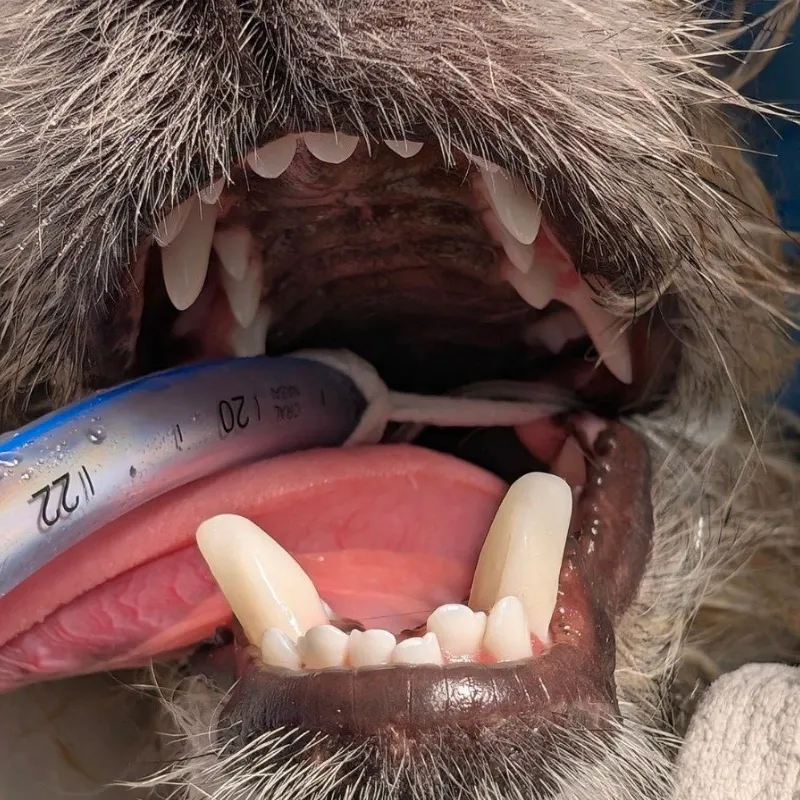
When adorable little Teddy first arrived at AAD, he had a tight bite, a narrowed left maxillary diastema and linguoversion of the lower canine teeth. This meant his lower canine teeth were positioned too far inward and were contacting the roof of his mouth, causing discomfort and creating an abnormal bite relationship.

Left untreated, this kind of traumatic malocclusion can keep rubbing against the roof of the mouth and cause ongoing pain and damage as the dog grows.

“Left untreated, this kind of traumatic malocclusion can cause ongoing pain and damage as a dog grows.”

Diagnostics and Treatment

After completing an oral examination and assessment of Teddy’s bite, we recommended orthodontic treatment using crown extensions. It’s a minimally invasive approach, and it was chosen to help guide the teeth into a healthier position while preserving natural tooth structure.

The crown extensions, made from acrylic or composite material, were carefully attached to Teddy’s lower canine teeth. When Teddy closed his mouth, the extensions created a gentle and controlled force that gradually encouraged the lower canines into a safer and more comfortable position within the narrowed diastema. In cases like Teddy’s, this approach can also assist with subtle movement of the upper canine teeth where spacing is limited.

Teddy came back for a series of check-ups so we could keep an eye on how his teeth were moving and ensure everything was still in place and working as it should.

As can sometimes happen with orthodontic appliances, Teddy managed to damage his crown extensions during treatment and they needed to be replaced. The initial extensions were white, while the replacement extension was blue. Breakage is a known risk during orthodontic treatment, which is why dogs like Teddy are monitored closely and provided extensive follow-up care, particularly when they are young and active.
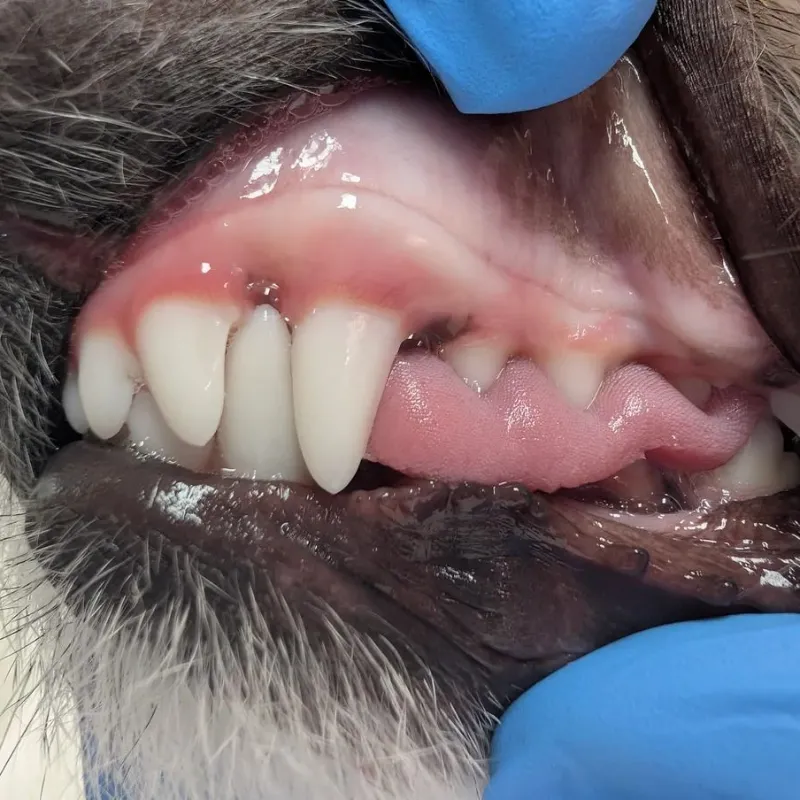
Close-up of a dog's mouth during a dental exam, showing inflamed pink gums and exposed canine teeth with a gloved finger nearby.
Close-up of a dog’s mouth during a veterinary dental procedure with an endotracheal tube in place.
Close-up of a dog’s teeth and gums showing healthy canine teeth during a veterinary dental examination.
Close-up of a dog’s healthy teeth and gums during a veterinary dental examination.

Outcome

Once the teeth had moved into a more appropriate position, they were able to remain there naturally without the need for long-term appliances, and so the crown extensions were removed under a short anaesthetic. Teddy’s treatment successfully reduced the traumatic contact with the roof of his mouth and resulted in a more comfortable and functional bite.

Teddy handled his treatment fantastically and was an absolute superstar from start to finish.

“Crown extensions can be a very effective, minimally invasive option for guiding teeth into a healthier position.”

Veterinary Comments

“Crown extensions can be a very effective, minimally invasive option… and despite managing to damage his extensions during treatment, Teddy progressed very well and achieved a comfortable, functional outcome.”

FAQs

What is a traumatic malocclusion in dogs?

A traumatic malocclusion occurs when teeth are positioned in a way that causes abnormal contact within the mouth. In Teddy’s case, his lower canine teeth were contacting the roof of his mouth, leading to discomfort and an unhealthy bite relationship.

How do crown extensions work in veterinary dental treatment?

Crown extensions are orthodontic appliances made from acrylic or composite material that are attached to the teeth to guide movement gradually over time. For Teddy, they created a gentle and controlled force that encouraged his lower canine teeth into a safer and more comfortable position.

Why did Teddy need multiple check-ups during treatment?

Orthodontic treatment requires close monitoring to ensure the teeth are moving correctly and the appliances remain secure and functional. Teddy returned for several check-ups throughout treatment, particularly because active young dogs can accidentally damage orthodontic appliances.

Can orthodontic appliances break during treatment?

Yes, breakage is a recognised risk during veterinary dental orthodontic treatment, especially in younger or more energetic dogs. Teddy damaged his crown extensions during treatment, which meant they needed to be replaced so treatment could continue safely and effectively.

Do dogs need permanent appliances after orthodontic treatment?

Not always. Once Teddy’s teeth had moved into a healthier position, they were able to remain there naturally without the need for long-term appliances, and the crown extensions were removed under a short anaesthetic.

Key Takeaways

A Caudal Malocclusion

Teddy presented with a traumatic malocclusion where his lower canine teeth were contacting the roof of his mouth, causing discomfort and an abnormal bite relationship.

Minimally Invasive Solution

Orthodontic crown extensions were used as a minimally invasive veterinary dental treatment to guide Teddy’s teeth into a healthier position while preserving natural tooth structure.

Monitoring is Important

Because orthodontic appliances can break under unexpected force, Teddy required regular follow-up appointments and replacement of his crown extensions during treatment.

Successful Treatment

After several weeks of monitored tooth movement, Teddy achieved a more comfortable and functional bite without the need for long-term orthodontic appliances.

Next steps

For Pet Owners

Are you concerned about your pet’s dental health? Call 1300 866 848 or fill out the contact form. We’ll coordinate with your primary vet to ensure the best outcome.

For Vets & Nurses

We’re here to help. If you’d like to refer a patient, please call us at 1300 866 848 , complete the referral form or email us with a brief case summary, relevant radiographs and lab results.

For advice and treatment guidance, email us with a brief case summary, relevant radiographs and lab results.


Refer a Patient Contact Us

Advanced Veterinary Dental Services

A comprehensive range of dental and oral surgery treatments.

Contact Us    Refer A Patient
Complex Anaesthesia

We assess each patient individually, considering their health history, age and any concurrent medical conditions, to tailor the anaesthetic approach to their specific needs.

Surgical Extractions

Removing complex teeth safely and with minimal impact.

Vital Pulpotomy

A vital pulpotomy is a time-sensitive procedure used to preserve the life of a tooth when the pulp becomes exposed due to trauma or dental treatment.

Jaw Fractures

Jaw fractures in pets require precise treatment to restore both structure and function, with a strong focus on proper bite alignment.

Periodontal Treatment

Periodontal treatment goes beyond routine dental care to address the deeper damage caused by advanced gum disease.

Oral Surgery

Pet oral surgery can help treat dental problems, injuries, and other conditions affecting your pet’s mouth. Learn about the available procedures and how they can improve your pet’s comfort and oral health.

Dental and Oral Imaging

Dental and oral imaging helps veterinarians identify dental problems that may not be visible during a routine examination. Learn how these imaging techniques support accurate diagnosis and effective treatment for your pet.

Root Canal Therapy

Root canal therapy can help save a damaged or infected tooth while relieving pain in pets. Learn how this dental procedure works and how it can help preserve your pet’s natural teeth and oral health.

Gingivoplasty

This procedure involves reshaping gum tissue to guide the eruption of canine teeth into a correct position, preventing traumatic occlusion and avoiding more invasive treatments.

Crown Height Reduction

Reducing the height of misaligned canine teeth and protecting the exposed pulp with a filling helps prevent chronic pain, preserve jaw structure and avoid extraction.

Inclined Plane – Crown Extensions

Orthodontic appliances like inclined planes or crown extensions can reposition misaligned canine teeth, preventing trauma and preserving tooth function without altering their shape.

Dog Braces (Orthodontics)

To address mesioverted  (‘lanced’ maxillary canine teeth) and manage linguoversion when the maxillary diastema (the space between the third incisor and canine teeth) is too narrow.

Restorations

Restorative dentistry repairs damaged teeth in pets, often using crowns, veneers and fillings. These procedures restore dental structure and function, ensuring long-term oral health.

Professional Dental Cleaning

Thorough cleaning and examination under anesthesia remove plaque and calculus, preventing periodontal disease and ensuring long-term oral health in pets.

Mandibulectomies and Maxillectomies

These surgeries involve partial or complete removal of the jaw to treat malignant oral tumours. Treatment options vary and may include surgery, chemotherapy or radiation.

Crown Amputation for Tooth Resorption

This procedure, often used for tooth resorption, involves removing the tooth crown while leaving the resorbing root remnant intact. It’s less invasive and used in cases where traditional extraction is no longer possible. Regular follow-up is recommended.